





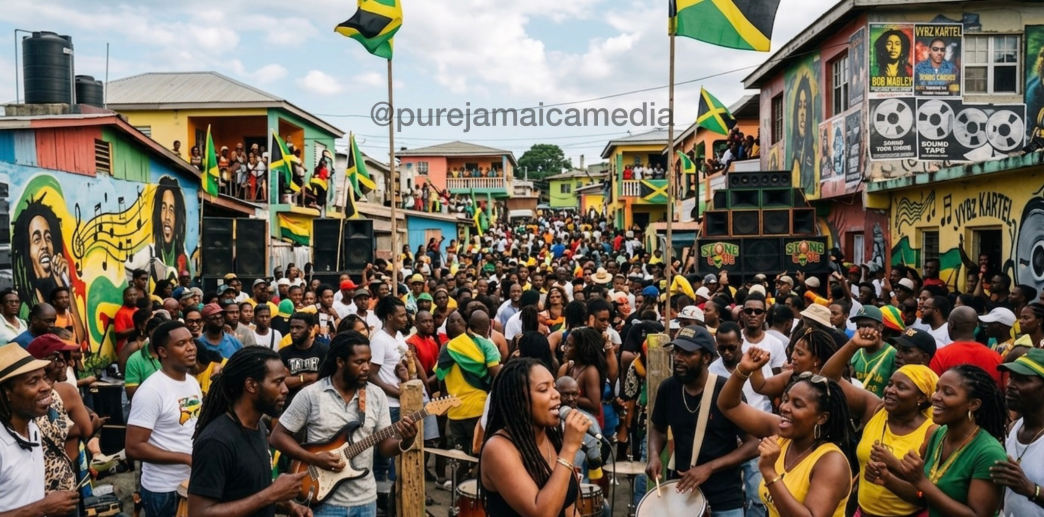
Jamaica is a global cultural powerhouse that defies its geographical size. Despite having a population of only 2.8 million people and counting, the island is widely cited by the United Nations Commission on Trade and Development (UNCTAD) as releasing more music recordings per capita than any other nation on Earth.
This isn’t just about volume; it’s about a relentless creative engine that has birthed entire genres and reshaped global pop culture.
1. The Birthplace of Six Global Genres
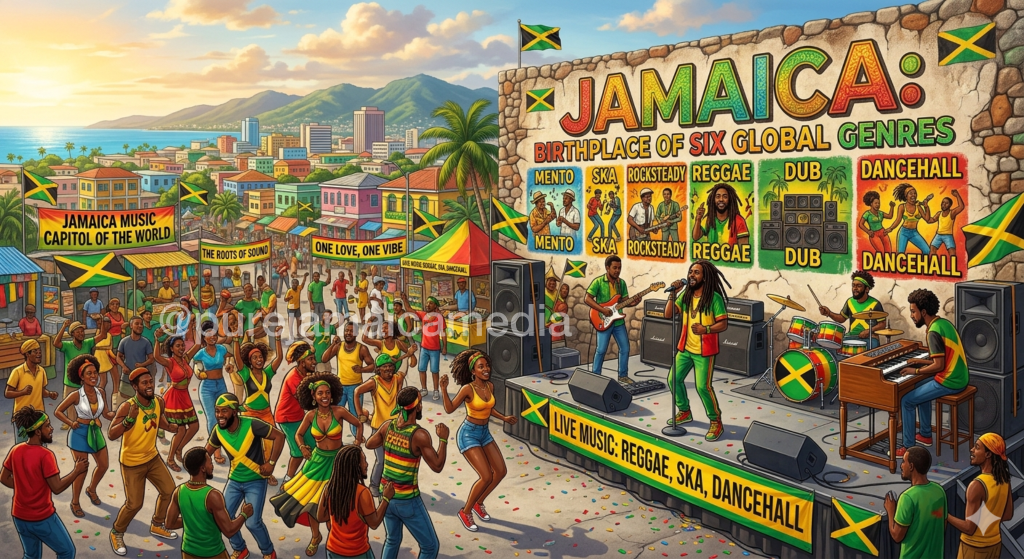
In just over 50 years, Jamaica has gifted the world six distinct musical genres, each evolving from the last:
- Mento: The island’s original folk music, often confused with Calypso but distinct in its rural roots and rhumba box bass.
- Ska: An upbeat, horn-driven sound that emerged in the late 1950s, coinciding with Jamaica’s independence.
- Rocksteady: A slower, soul-focused successor to Ska that reigned in the mid-1960s.
- Reggae: The “King” of Jamaican music, made world-famous by icons like Bob Marley.
- Dub: An experimental production style that pioneered remix culture and heavy bass manipulation.
- Dancehall: The high-energy, electronic-driven “Prince” of the island’s sounds, defined by rapid-fire lyrical delivery.

2. Kingston: The World’s Studio Capital
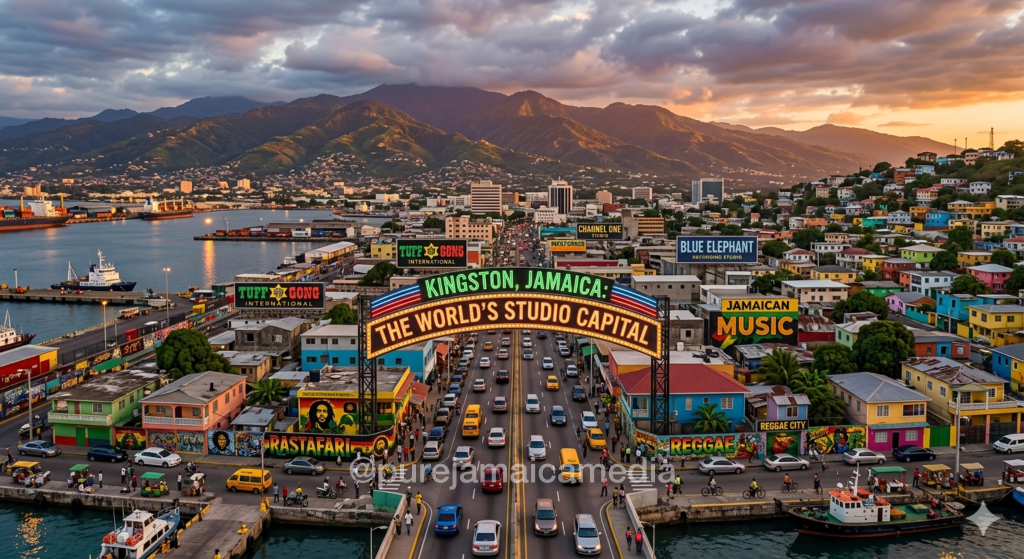
Kingston, a designated UNESCO City of Music, boasts the highest number of recording studios per capita in the world. The city’s infrastructure is built around sound, with legendary facilities like Tuff Gong and Mixing Lab continuing to attract international artists seeking the “authentic” Jamaican flavor.
3. A Culture of Constant Output
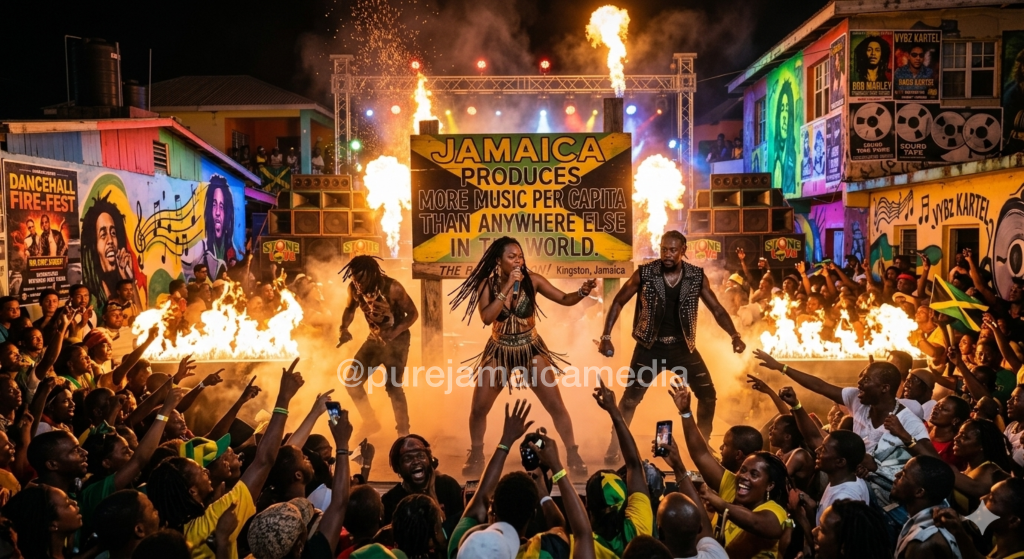
The sheer speed of production is staggering. Local artists and producers release hundreds of new tracks every week. This “pressure-cooker” environment is fueled by:
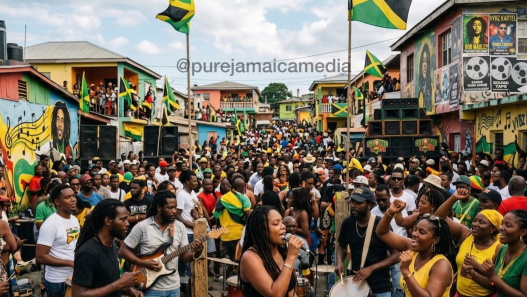
- Sound System Culture: Since the 1940s, mobile discos have served as the ultimate testing ground for new music, where “clashes” between rival systems drive constant innovation.
- Economic Necessity: For many in Kingston’s inner-city communities, music is a vital path to social mobility and global visibility.
- Global Impact: While Jamaica is small, its music outpaces larger genres. For example, Reggae saw significant on-demand audio growth in the U.S. in early 2025, outperforming many mainstream subgenres.

Key Facts Regarding Jamaican Music Production
- Highest Production Density: Jamaica releases a higher volume of music recordings per person than any other country, producing music across genres like ska, rocksteady, reggae, dub, mento, and dancehall.
- Recording Studios: Kingston, the capital of Jamaica, is noted for having the highest number of music recording studios per capita in the world.
- A “Music Factory”: Many international record companies use Jamaica to test new music, often launching artists there before a worldwide release because of its influential music culture.
- Cultural Impact: Despite its small size, Jamaica’s musical influence is “second to none,” shaping world trends for decades.
Economic Impact
- Global Revenue: In the late 1990s, annual sales of reggae recordings were estimated to be at least $1.2 billion, with Jamaican musicians and producers earning around $300 million.
- Creative Economy: Music and creative industries are estimated to contribute roughly 5% of Jamaica’s GDP, with many arguing the actual impact is higher due to the informal nature of many productions.
- UNESCO Designation: Kingston is recognized as a UNESCO City of Music, in part due to this immense production capacit