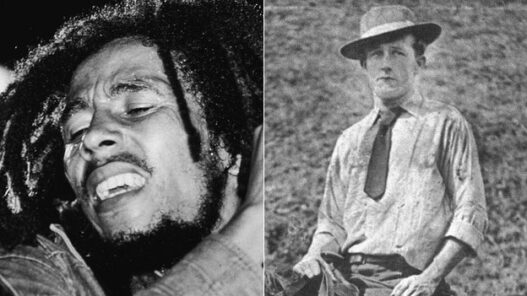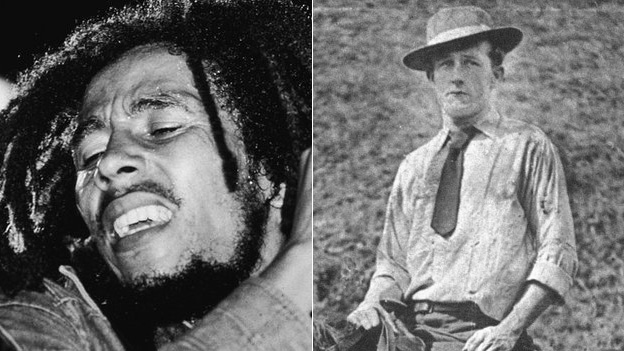






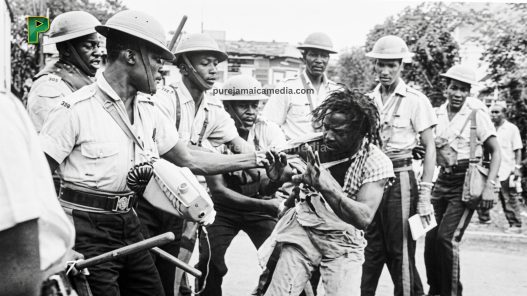
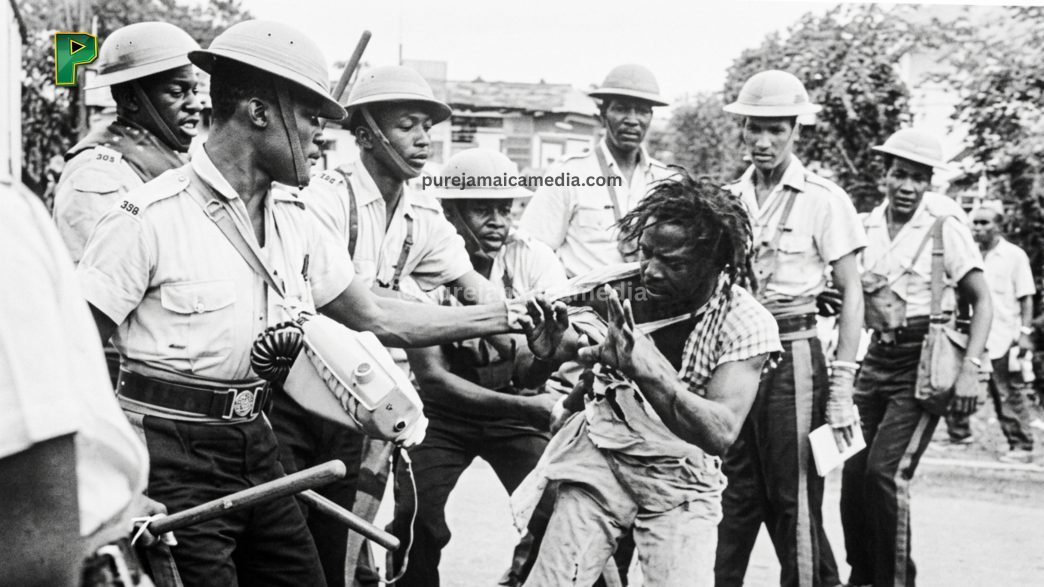
The Coral Gardens incident, also known as the Coral Gardens Massacre or Bad Friday, was a series of violent events between April 11 and 13, 1963, that resulted in the state-sanctioned persecution of the Rastafari community in Jamaica. Just one year after independence, the Jamaican state launched a massive crackdown that saw hundreds of Rastafarians arrested, tortured, and killed.
The Roots of Conflict: Land and Tourism
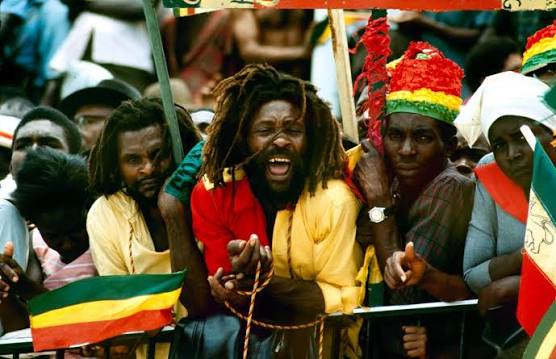
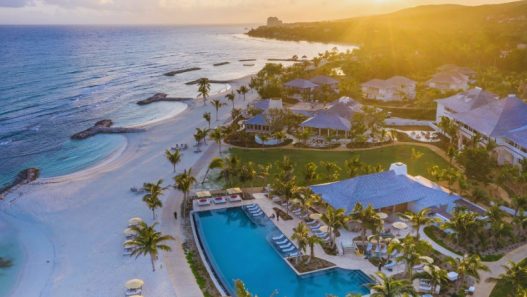
The immediate catalyst was a land dispute on the Rose Hall Estate near Montego Bay. The government and local landlords sought to repurpose this land for tourism development, viewing the small-scale farming and settlements of Rastafarians as an obstacle.
Key figures in this tension included Rudolph Franklyn, a Rastafarian farmer who had a long-standing conflict with the property’s overseer, Edward Fowler. In 1961, police had shot Franklyn six times and left him for dead during an attempted eviction; he survived but was subsequently imprisoned on cannabis charges, leading to a deep sense of injustice and a vow for revenge.
The Events of “Bad Friday”
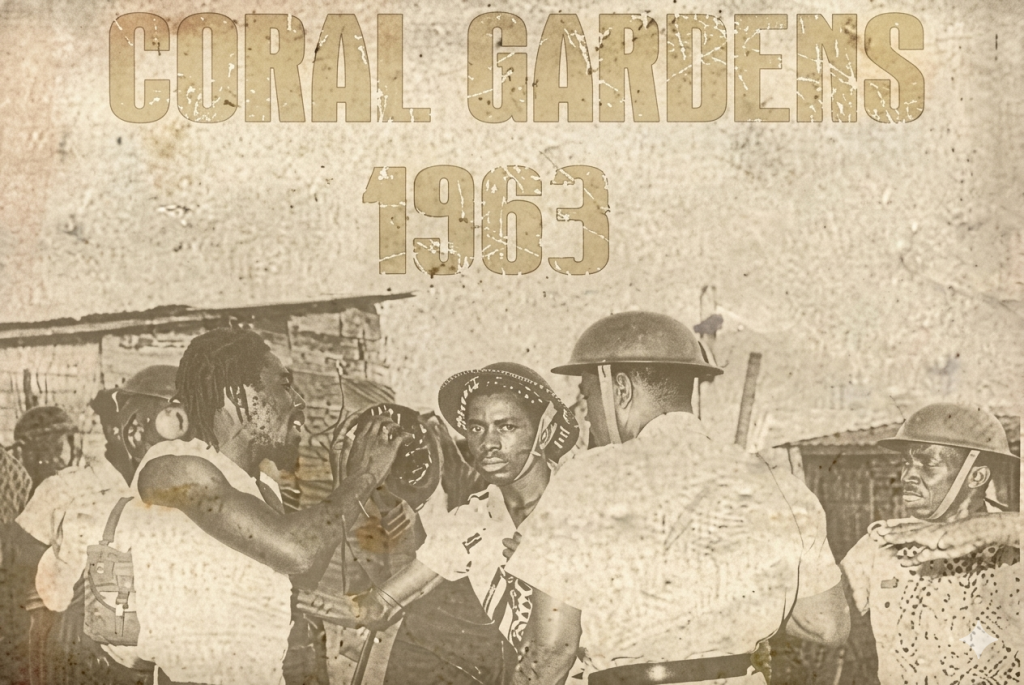
The violence escalated on Holy Thursday, April 11, 1963, when Franklyn and a small group of followers allegedly set fire to a Shell gas station owned by Ken Douglas.
- The Initial Clash: A skirmish between the group and arriving police resulted in eight deaths: three Rastafarians (including Rudolph Franklyn), two police officers, and three civilians.
- The State’s Directive: Then-Prime Minister Sir Alexander Bustamante reportedly ordered the police and military to “Bring in all Rastas, dead or alive”.
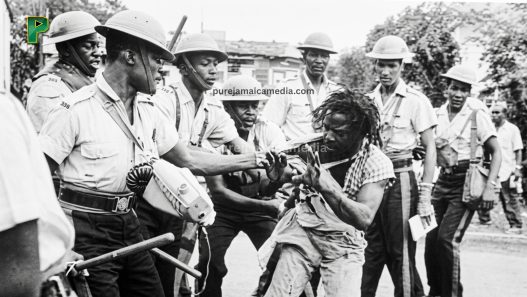
- Mass Crackdown: On Good Friday, April 12, security forces swept through working-class neighborhoods and Rasta encampments. Hundreds of “bearded men” across multiple parishes—including St. James, Hanover, and Trelawny—were rounded up regardless of their involvement in the gas station incident.
Systematic Persecution and Brutality
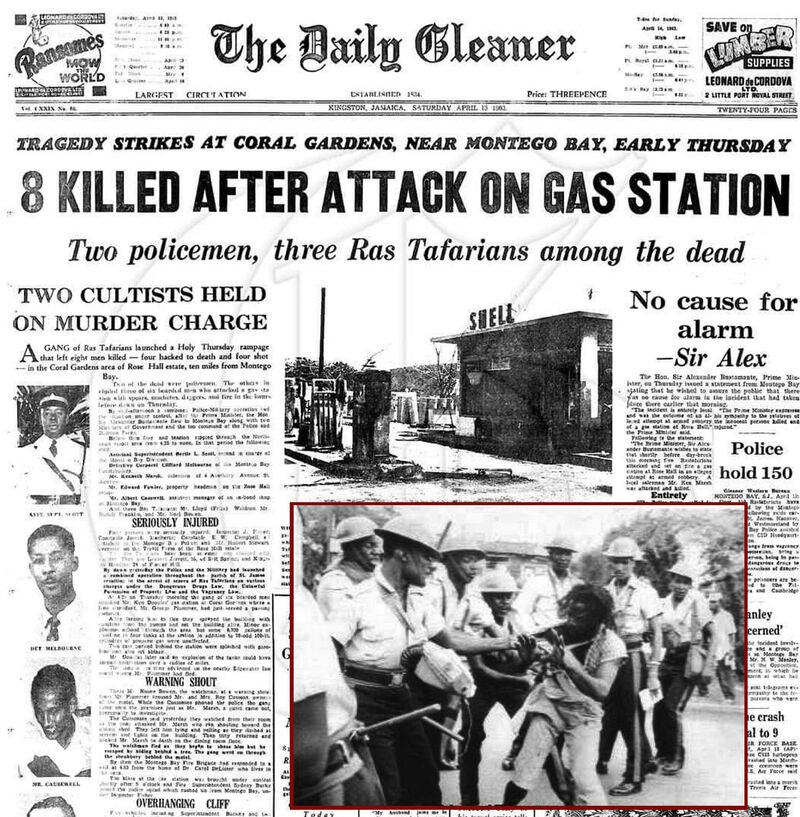
The crackdown was marked by extreme dehumanization. Detained Rastafarians were often beaten and tortured, and their dreadlocks were forcibly shaved off as an act of humiliation and spiritual violation. Media reports at the time often demonized the community, labeling the events as a “Rasta uprising” to justify the state’s military-style intervention.
The Long Road to Justice
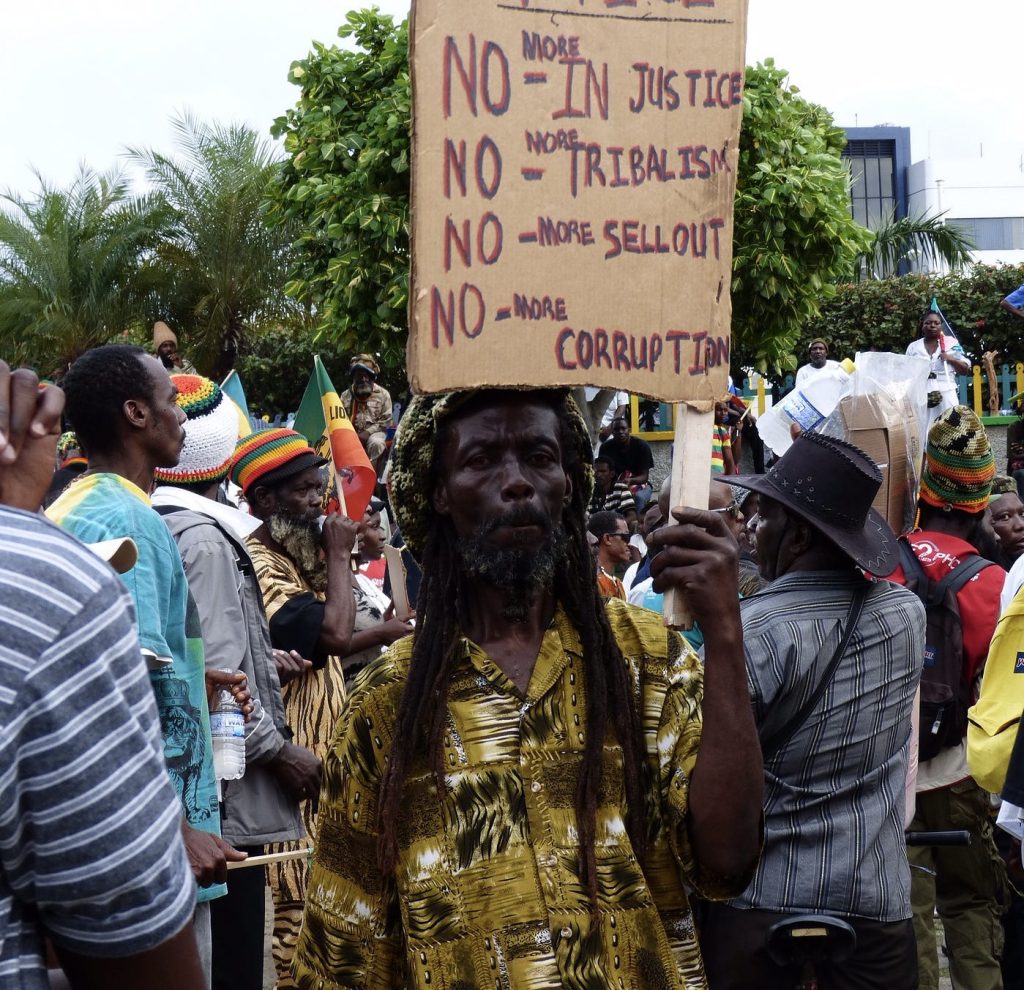
For decades, the Rastafari community commemorated these dates as “Bad Friday,” seeking recognition for the human rights violations they endured.
- 2015 Public Defender Report: A major investigation found that the state had breached the constitutional rights of Rastafarians and recommended formal reparations.
- 2017 Official Apology: Prime Minister Andrew Holness issued a formal apology in Parliament, acknowledging the “grave injustice” and “repressive” actions of the state.
- Reparations and Heritage: The government established a J$10 million trust fund for survivors and designated Pinnacle, a historical Rasta commune site, as a protected heritage area.
Today, the 1963 Coral Gardens Massacre stands as a reminder of the struggle for religious freedom and civil rights in post-colonial Jamaica.