
Locals Demand Transparency and Open Shores in the Escalating Battle for Access to Jamaica’s Beaches
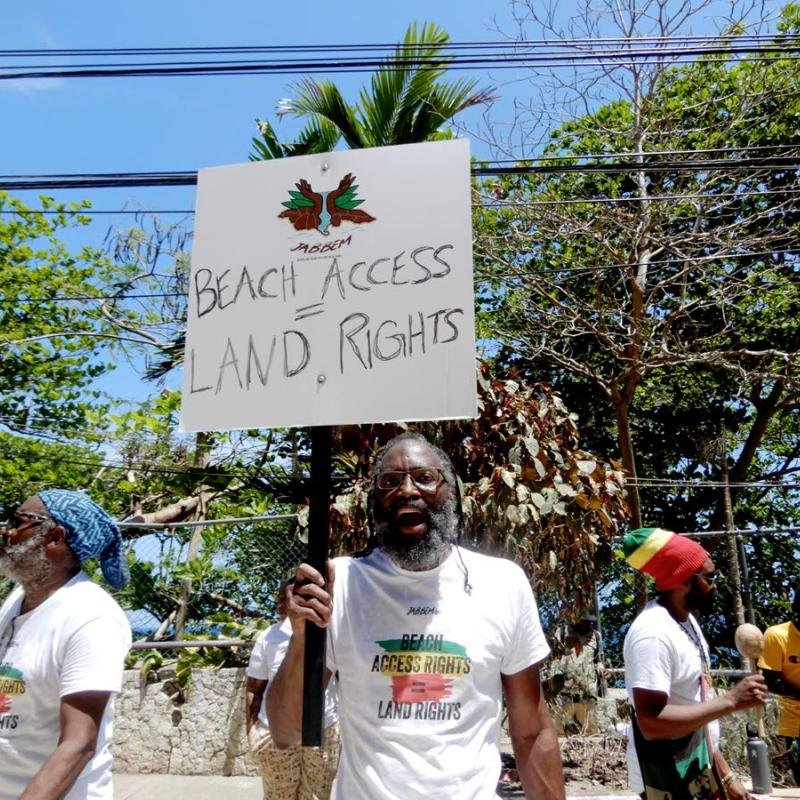
Jamaica’s world-famous white-sand beaches and turquoise waters attract millions of international visitors each year, serving as the foundation of a thriving multibillion-dollar tourism industry. Yet behind the postcard-perfect scenery, a major legal and social battle is unfolding over who actually gets to enjoy the island’s shoreline. Across Jamaica, community activists, fishers, craft vendors, and residents are challenging the privatization of beaches by sprawling all-inclusive resorts, arguing that locals are being locked out of their own natural heritage. Colonial-Era Laws and Modern Resorts For many Jamaicans, accessing the coast now requires paying expensive day passes to enter private hotel properties. At the center of the dispute is the 1956 Beach Control Act, a piece of legislation enacted while Jamaica was still a British colony. The law placed the island’s foreshore and seabed under state ownership, creating a licensing framework that campaigners say has allowed successive governments to hand exclusive control of prime coastal areas over to private companies. To fight back, grassroots groups have launched five simultaneous civil court cases against the government and private landowners to stop further beach privatization in major tourist destinations. Campaigners are relying heavily on the 1882 Prescription Act, which protects the public’s legal right to use land or pathways that have served as continuous public access routes for at least 20 years. Activists argue this law applies directly to Jamaica’s historic beaches. Grassroots Resistance and Cultural Connection The movement is spearheaded by the Jamaica Beach Birthright Environmental Movement (Jabbem), founded in 2020 by immunologist Dr. Devon Taylor following local protests over the privatization of Mammee Bay in Saint Ann. Jabbem views the issue as an anticolonial struggle, warning that cutting Jamaicans off from the sea violates their constitutional rights and threatens generations of fishers who depend on the ocean for food and income. Beyond economics, beaches hold deep cultural and spiritual significance. They serve as primary spaces for affordable family recreation, meditative retreats for Rastafarians, and healing destinations—such as Portland’s Blue Lagoon—for elderly residents. Carolyn Cooper, professor emerita at the University of the West Indies and volunteer adviser to Jabbem, criticized the restrictions as outrageous, noting that successive governments have failed to recognize that Black Jamaicans are entitled to leisure on their own island. Balancing Tourism and Public Rights Government officials defend their approach by emphasizing tourism’s vital role in the national economy. Minister of Environment and Climate Change Matthew Samuda noted that the sector directly employs between 112,000 and 116,000 Jamaicans and supports up to 350,000 people through connected industries. Officials also warn that protests and barrier removals could cause costly reputational damage to the industry. While Prime Minister Andrew Holness proposed a new beach access and management policy in 2018, and recent approvals for new developments require developers to carve out corridors to the sea, activists remain unconvinced. They argue these measures only offer conditional access at the discretion of landowners and do nothing to reopen beaches that are already privatized. Campaigners stress they are not anti-tourism, pointing to neighboring Caribbean nations like St. Lucia, where laws guarantee public access to all beaches alongside a booming hospitality sector. Despite costly trial postponements and a lengthy legal road ahead, Jabbem remains confident that its evidence for prescriptive rights will ultimately secure permanent public access for all Jamaicans
Balenciaga Names British Jamaican Martine Rose It’s First Creative Director After 109 Years

Luxury fashion just witnessed a watershed moment, and Caribbean culture is right at the heart of it. At PureJamaicaMedia.com, we take pride in celebrating global pioneers carrying Jamaican roots onto the world’s biggest stages. On November 6, 2026, French luxury conglomerate Kering officially appointed Martine Rose as the new creative director of Balenciaga. With this landmark move, the acclaimed British-Jamaican designer becomes the first woman to lead the storied Parisian house in its 109-year history. Breaking a Century-Old Barrier Founded by Cristóbal Balenciaga in 1917, the iconic fashion house has spent more than a century without a female creative director at its helm. Martine Rose’s appointment shatters that glass ceiling while marking another rare milestone in European luxury: she becomes only the second Black woman to lead a major heritage fashion house, following fellow British-Jamaican designer Grace Wales Bonner’s appointment at Hermès. Stepping into the Paris-based role on November 16, 2026, Rose will oversee all menswear, womenswear, and accessories collections. She succeeds Italian designer Pierpaolo Piccioli, who departed after a brief three-season stint at the label. Kering leadership praised Rose’s sharp instinct for modern subcultures, noting her vision will keep Balenciaga driving contemporary fashion conversations forward. A Full-Circle Homecoming at Balenciaga While her appointment makes history, Martine Rose is no stranger to Balenciaga’s atelier. Between 2015 and 2018, she worked behind the scenes as a menswear consultant alongside former creative director Demna. During those pivotal years, Rose helped pioneer the exaggerated, oversized proportions and street-inflected tailoring that transformed Balenciaga’s menswear division into a global commercial powerhouse. Returning now as sole creative director represents a triumphant full-circle chapter in her career. Rooted in Jamaican Heritage and London Subculture Born in South London in 1980, Martine Rose has built an unmistakable design language grounded in authenticity, community, and cultural pride. Throughout her career, she has woven her British-Jamaican heritage—from reggae sound systems and dancehall style to 1990s rave culture and British football terraces—directly into high-fashion menswear. Her rise from grassroots entrepreneur to luxury titan is equally inspiring. Rose launched her eponymous label in 2007 using a £1,500 loan from The Prince’s Trust, debuting with a tight, focused collection of just 10 shirts. Over the next two decades, she cultivated a fiercely loyal global following and spearheaded coveted collaborations with giants like Nike, Supreme, Clarks, and Stüssy. Here at PureJamaicaMedia.com, we look forward to seeing how she channels that unmistakable Jamaican-British energy onto Paris runways. Frequently Asked Questions About Martine Rose and Balenciaga
Anansi Man Debuts New Comic Book Series Featuring The First Jamaican Superhero
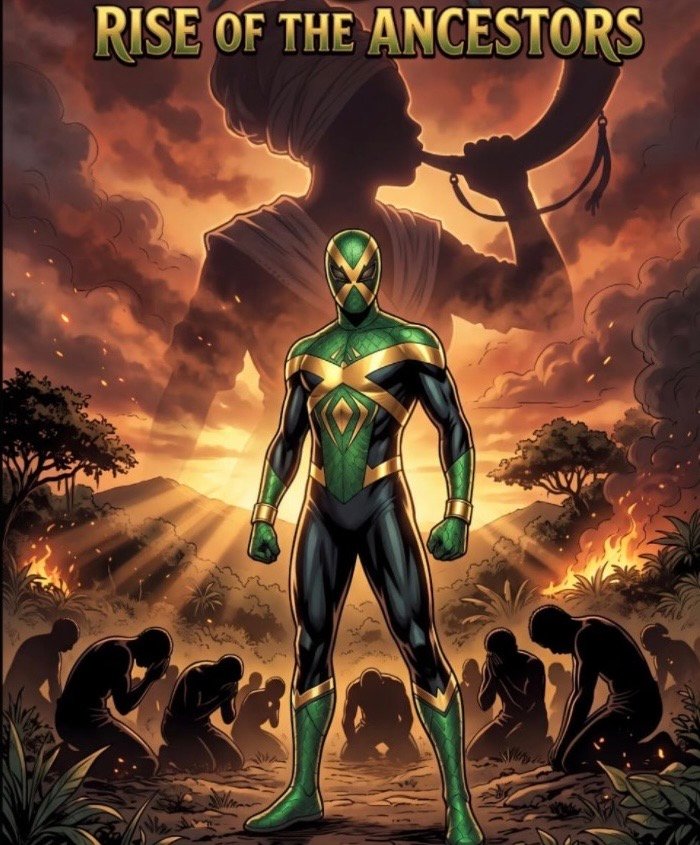
Caribbean storytelling has officially entered a bold new era. At PureJamaicaMedia.com, we love spotlighting homegrown talent pushing Jamaican culture forward, and few projects have captured global attention quite like Anansi-Man: Rise of the Ancestors. Created by Jamaican multi-hyphenate artist Conroy Allen—widely known online as Deeosis—this 48-page debut comic book introduces the island’s first original superhero. Blending centuries-old West African folklore with modern superhero action, Anansi-Man is not just making waves on Amazon; he is actively paving a path toward a major big-screen debut. Who Is Anansi-Man? Dressed in a striking green, gold, and black suit that echoes the geometry of the Jamaican flag, Anansi-Man reimagines one of the Caribbean’s most beloved folk figures for a new generation. Rather than relying strictly on brute strength, this hero channels the cunning intellect, acrobatic agility, sharp illusions, and unmistakable Jamaican humor of Anansi, the legendary West African trickster spider whose stories traveled across the Atlantic during the slave trade as symbols of survival and wit. How Conroy Allen Started His Journey as Anansi-Man Long before Anansi-Man: Rise of the Ancestors topped digital charts, the character lived on the streets of Jamaica in real life. Born on December 17, 1997, in Port Antonio, Portland, Conroy Allen built his early career as a dancer, actor, and content creator. His resume already boasted impressive milestones—including appearances in the James Bond film No Time to Die, the Netflix documentary MOVE, and modeling campaigns for the Arsenal x Adidas Jamaica kit—before he decided to build a superhero from scratch. Growing up in Jamaica, Allen vividly remembers adjusting the television antenna on his roof just to catch a clear signal for cartoons, while nighttime brought oral storytelling sessions centered around Brer Anansi. Inspired by those childhood memories and his background in acrobatics and street performance, Allen first brought Anansi-Man to life in a homemade costume. He took to the streets across Jamaican parishes—from Portmore and Portland to Kingston and St. Andrew—performing backflips, interacting with fans, joining Jamaica Carnival road marches, and even going viral alongside international livestreamers like IShowSpeed. As audiences fell in love with the “Jamaican Spider-Man” persona, Allen realized the character deserved an official universe of his own. When major studios or backers did not immediately step forward to fund his vision, Allen took matters into his own hands. He enrolled in online courses, endured countless sleepless nights writing and refining his script, and upgraded his signature suit with sharper, trickster-inspired lenses. By late October 2026, he independently published Anansi-Man: Rise of the Ancestors: Issue 1, proving that authentic Jamaican stories can thrive independently. Inside the Plot and Bestseller Ambitions The debut issue plunges readers into a high-stakes narrative where a museum theft in Kingston rips open a temporal vortex, sending Anansi-Man back in time. To prevent a dark force from erasing Jamaica’s history, he teams up with foundational figures including Nanny of the Maroons, Sam Sharpe, Paul Bogle, George William Gordon, Marcus Garvey, Alexander Bustamante, and Norman Manley. Released in late October 2026, the comic quickly resonated across international markets, climbing to the #1 bestseller spot on Amazon’s Comics & Graphic Novel History & Price Guides chart and nearly selling out its initial print run. Conroy Allen plans a three-part narrative arc to fully unpack the hero’s origins, with a long-term vision of transitioning the project into a live-action feature film. Frequently Asked Questions About Anansi-Man