






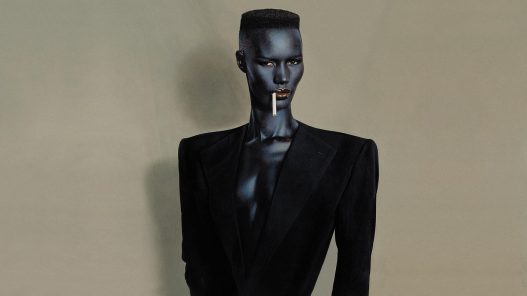
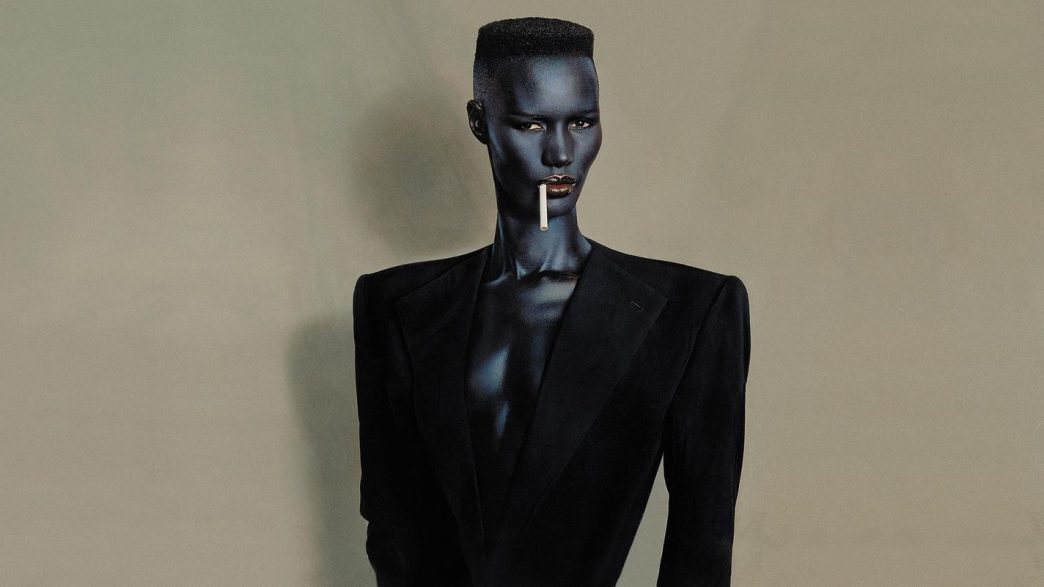
Grace Jones is not just an entertainer; she is a seismic cultural force, a self-created myth, and a living sculpture. Born Beverly Grace Jones on May 19, 1948, in Spanish Town, Jamaica, she grew up in a strict, religious household under the severe discipline of her stepfather, a Pentecostal bishop. This rigid upbringing set the stage for the explosive rebellion and unapologetic liberation that would define her career.

Jamaican Roots and American Migration
Grace’s early life was marked by the contrast between the lush Jamaican landscape and the intense spiritual environment of her home. When she was 13, she moved with her family to Syracuse, New York, where she studied drama at Onondaga Community College. Her deep, resonant voice and imposing 5’10” frame, often viewed as unconventional, initially struggled to find a conventional place in the performing arts.
The Parisian Transformation: Supermodel Stardom
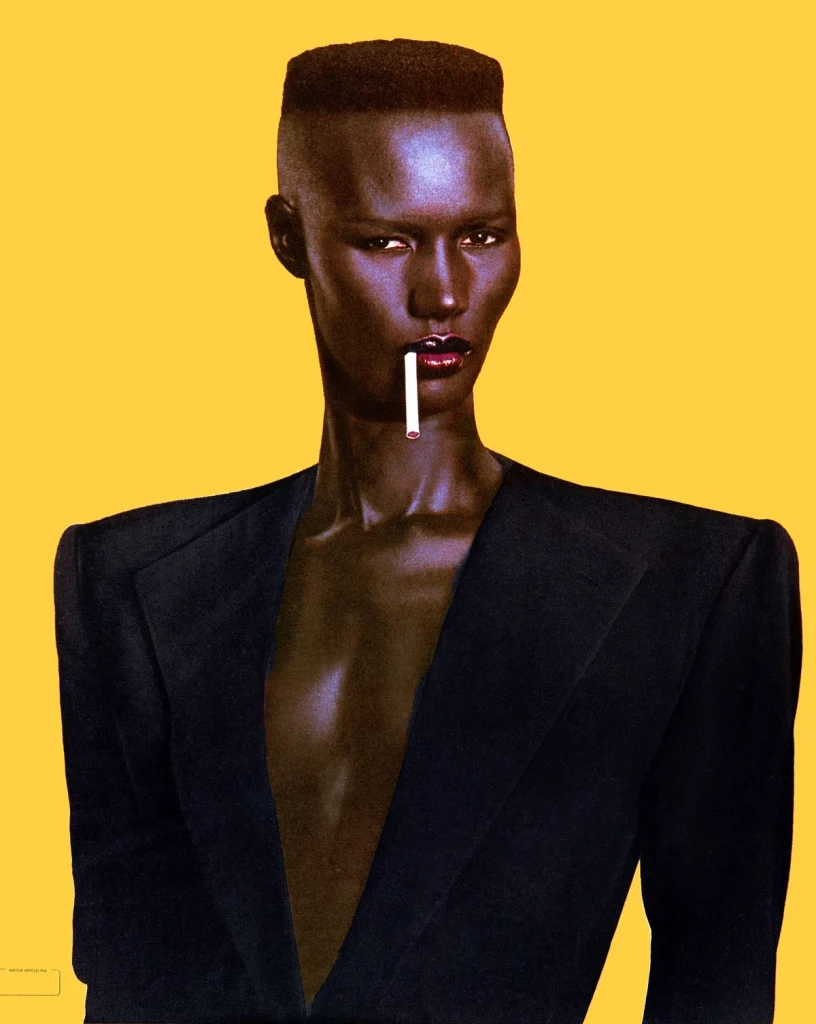
In the early 1970s, Jones moved to Paris, where her striking, androgynous looks and commanding presence were immediately celebrated by the fashion world. She signed with the Wilhelmina modeling agency and quickly became an in-demand figure, walking the runways for designers like Yves Saint Laurent and Kenzo, and gracing the covers of Elleand Vogue.
Her look—sharp angles, close-cropped hair, and a muscular physique—defied the soft, traditional ideals of beauty prevalent at the time. She became a muse to artists and photographers, most notably Jean-Paul Goude, who would become her creative partner, designing her iconic album covers and stage persona.
Disco Queen and Musical Pioneer
Transitioning from the runway to the recording studio, Jones signed with Island Records. She became a fixture in the burgeoning New York disco scene of the late 1970s, particularly at the legendary Studio 54.
- Disco Era (1977–1979): Her early albums, including Portfolio and Fame, were a blend of disco arrangements and dramatic covers of classic songs, establishing her as a disco diva.
- The Signature Sound (1980s): The defining shift came with the album Warm Leatherette (1980) and Nightclubbing (1981). These albums saw her radically pivot to a sophisticated, experimental sound blending New Wave, Reggae, Funk, and Post-Punk. This genre-bending music, often referred to as her “Compass Point” sound (named after the Bahamas studio where it was recorded), produced hits like “Pull Up to the Bumper,” “I’ve Seen That Face Before (Libertango),” and “Slave to the Rhythm.”
This music was perfectly paired with her minimalist, abstract, and often confrontational stage performances, which blurred the lines between music, art, and performance.
Screen Presence: Actress and Icon
Jones brought her unique visual power to Hollywood, securing several memorable film roles:
- Conan the Destroyer (1984): She played the intimidating warrior Zula opposite Arnold Schwarzenegger, a role that capitalized on her fierce physicality.
- A View to a Kill (1985): She achieved global recognition as the ruthless assassin and Bond girl, May Day, opposite Roger Moore.
- Boomerang (1992): Jones delivered a hilarious cameo as the eccentric supermodel Strangé opposite Eddie Murphy.
Legacy and Cultural Impact
Grace Jones’s impact on pop culture is immeasurable:
- Fashion: She popularized the androgynous, architectural style that has influenced designers and artists for decades. Her geometric haircuts and powerful tailoring were years ahead of their time.
- Identity and Gender: She challenged conventional notions of femininity and masculinity, using her body as a canvas to explore fluid identity long before it became a mainstream topic.
- Music and Performance: Her innovative musical style influenced artists from Annie Lennox to Lady Gaga, while her fearless, often shocking, stage presence laid the groundwork for modern pop spectacle.
Today, Grace Jones continues to perform and remain an active cultural figure. She is the living embodiment of rebellion, art, and unapologetic self-expression—the Imperious Icon who refused to be categorized and, in doing so, became truly timeless.