








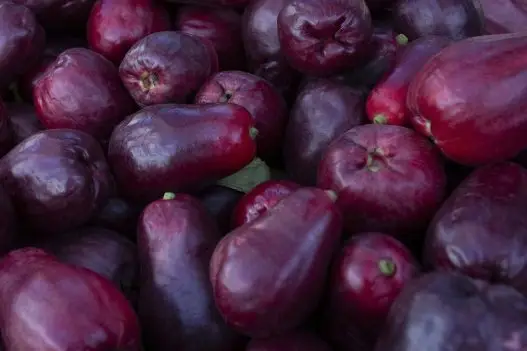
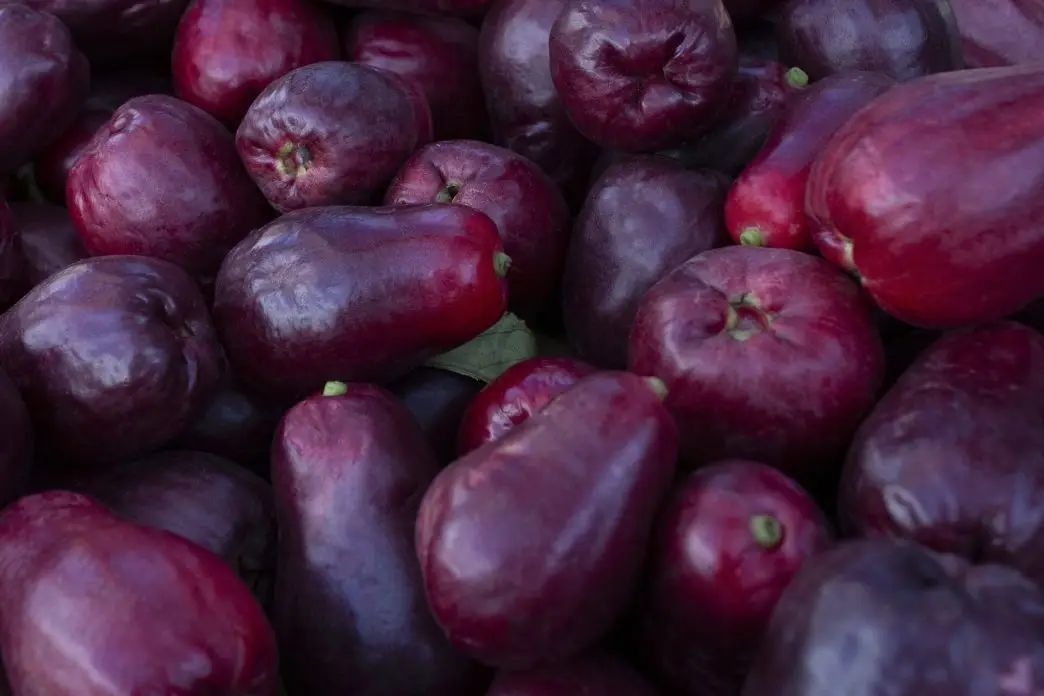
The Jamaican Apple, known scientifically as Syzygium malaccense and locally as the Otaheite Apple, is a tropical fruit so deeply ingrained in Jamaican culture that many assume it is native to the island. In reality, this vibrant, bell-shaped fruit has a fascinating global history and a nutritional profile that makes it a true “super-fruit” of the Caribbean.
Origins: A Traveler from the Pacific
While it is the quintessential Jamaican treat today, the Otaheite apple is actually native to Southeast Asia, specifically the Indo-Malayan region.

- The Captain Bligh Connection: The fruit was introduced to Jamaica in 1793 by Captain William Bligh. It arrived on the ship Providence—the same vessel that brought the breadfruit—as part of an effort to provide sustainable food sources for the island.
- Naming the Fruit: The name “Otaheite” is the former name for the island of Tahiti, which was the primary source of the saplings Bligh brought to the Caribbean.
Health Benefits: More Than Just Hydration
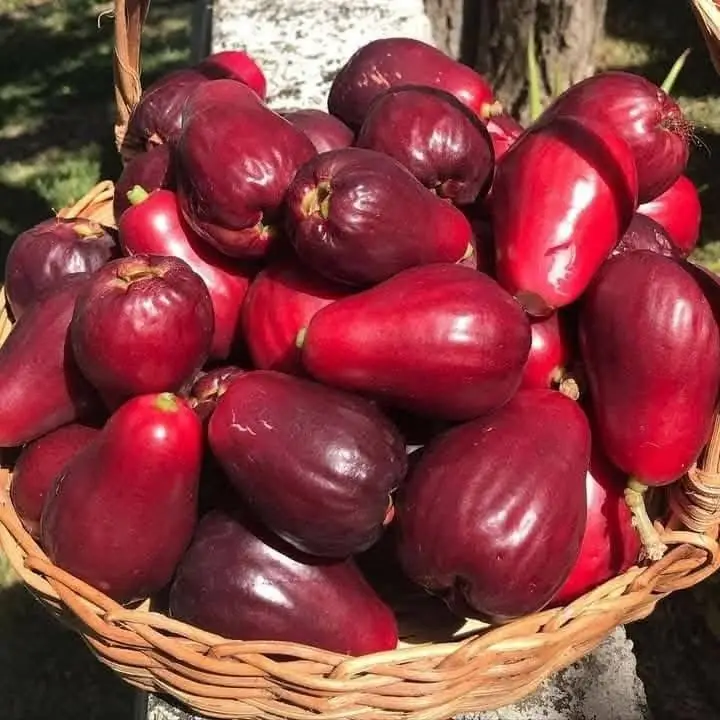
Beyond its refreshing taste, the Jamaican Apple is packed with nutrients that support several bodily functions.

- Immune & Skin Support: It is a significant source of Vitamin C, which aids in collagen production for skin elasticity and boosts the immune system.
- Digestive Health: The fruit contains high levels of dietary fiber (pectin), which can help regulate digestion and may act as a prebiotic for gut health.
- Vision & Circulation: Substantial amounts of Vitamin A promote better eye health, while other compounds are credited with improving circulation and lowering blood pressure.
- Low-Calorie Hydration: Composed of roughly 91% water, it is an ideal snack for hydration without the worry of high caloric intake.
Things You Probably Didn’t Know
- The “Crimson Carpet”: When the tree is in bloom, it produces spectacular purplish-crimson flowers with hundreds of long stamens. When these flowers fall, they often create a beautiful, thick “crimson carpet” on the ground beneath the tree.
- Medicinal Flowers & Bark: In traditional medicine, a tea made from the flowers is used to reduce fever, while extracts from the bark are used to treat mouth ulcers and thrush.
- Sacred Roots: In ancient Hawaii, where it was known as the “Mountain Apple,” the wood was considered sacred and used to carve religious idols.
- A “Fragrant” Juice: When blended into a drink with ginger and lime, the juice of the Jamaican apple is noted for having a pleasant, almost perfume-like aroma.
- Versatile Beyond Raw: While mostly eaten fresh, it can be stewed with brown sugar to make a sauce served with ice cream, or even fermented into wine